The sorry tale of Robert E Thorpe: excerpted from
www.stacyhouse.com/@Robert_Thorpe/mainpage.html
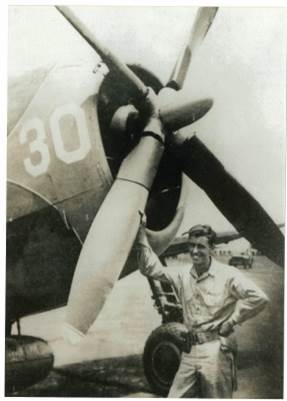
Walter Thorpe and Nora nee Gill married in Rhode Island, USA in 1919. They had four children, Richard b 1921 who died as a child; Robert b. 1923; and two younger siblings, Nancy and Gill.
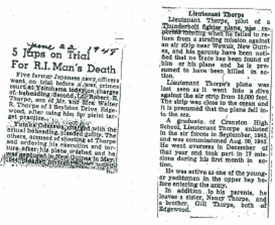
A resident of Cranston, 2nd Lt. Robert E. Thorpe (Bob) enlisted in September of 1942, shortly after graduating from Cranston High School. He was commissioned on August 30th of 1943 and became a World War II pilot. He had flown 17 missions during his first month in action before being captured when his P-47D Thunderbolt was hit by small arms fire during a strafing run on the Japanese garrison at Wewak on May 27, 1944. Bob ditched in the waters off Kairiru Island, New Guinea. The plane sank immediately, but he was lucky enough to find a log drifting nearby. Using it for flotation, he managed to reach shore.
There his luck ran out. Bob was captured by a Formosan civilian unit and marched across the island to the 27th Japanese Special Naval Base Force. Rear Admiral Shiro Sato, the unit commander, ordered his senior staff officer, Captain Kiyohisa Noto, to take charge of the prisoner. Noto, in turn, instructed Lt. Commander Kaoru Okuma to interrogate him.
Okuma's interrogation got nowhere. Obeying the Military Code to the letter, Bob refused to provide any information beyond name, rank and service number. Okuma became enraged and beat the prisoner unmercifully. He then invited Japanese enlisted personnel to join in the beating, and Bob was struck repeatedly with fists and sticks. But the beatings were only the beginning. Bob learned that he was to die, and, bleeding from his back, shoulders and face, he walked, unassisted, to his execution site...
The details of his horrific death can be found elsewhere. Suffice to say, he was buried in an unmarked grave in large gardens about 20 meters west of a stream and about 50 meters north of the main road in the fields.
After the war ended, the five officers involved in the execution went on trial on June 22, 1948, in Yokahama, Japan. Four of the officers were sentenced to life in prison while, Okuma was sentenced to hang. It would seem that justice had been done. In fact, only one of the original sentences received by the five convicted war criminals - Okuma's execution - was ever carried out.
A resident of Cranston, 2nd Lt. Robert E. Thorpe (Bob) enlisted in September of 1942, shortly after graduating from Cranston High School. He was commissioned on August 30th of 1943 and became a World War II pilot. He had flown 17 missions during his first month in action before being captured when his P-47D Thunderbolt was hit by small arms fire during a strafing run on the Japanese garrison at Wewak on May 27, 1944. Bob ditched in the waters off Kairiru Island, New Guinea. The plane sank immediately, but he was lucky enough to find a log drifting nearby. Using it for flotation, he managed to reach shore.
There his luck ran out. Bob was captured by a Formosan civilian unit and marched across the island to the 27th Japanese Special Naval Base Force. Rear Admiral Shiro Sato, the unit commander, ordered his senior staff officer, Captain Kiyohisa Noto, to take charge of the prisoner. Noto, in turn, instructed Lt. Commander Kaoru Okuma to interrogate him.
Okuma's interrogation got nowhere. Obeying the Military Code to the letter, Bob refused to provide any information beyond name, rank and service number. Okuma became enraged and beat the prisoner unmercifully. He then invited Japanese enlisted personnel to join in the beating, and Bob was struck repeatedly with fists and sticks. But the beatings were only the beginning. Bob learned that he was to die, and, bleeding from his back, shoulders and face, he walked, unassisted, to his execution site...
The details of his horrific death can be found elsewhere. Suffice to say, he was buried in an unmarked grave in large gardens about 20 meters west of a stream and about 50 meters north of the main road in the fields.
After the war ended, the five officers involved in the execution went on trial on June 22, 1948, in Yokahama, Japan. Four of the officers were sentenced to life in prison while, Okuma was sentenced to hang. It would seem that justice had been done. In fact, only one of the original sentences received by the five convicted war criminals - Okuma's execution - was ever carried out.
Body never recovered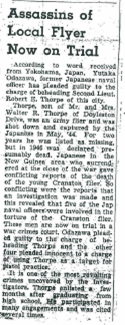
The truth about the aftermath of Bob Thorpe's brutal death only began to emerge when his father, Walter Thorpe, started a campaign to have his son's remains returned to Rhode Island.
Walter Thorpe had no knowledge that the Japanese officers involved had provided a detailed sketch of the burial site, because the court martial records were classified. Nor did he have much help from the U.S. officials and politicians he appealed to. During his lifetime, he compiled a thick file of correspondence with the American Graves Registration Service indicating that his son's remains were unrecoverable. All records pertaining to the search and recovery of Bob Thorpe were closed. The American Graves Registration continues to stonewall the family about when or if Robert's remains will ever be recovered. |
Campaign in US House of Representatives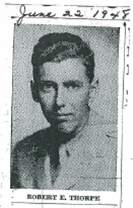
Ken Dooley, an author, and a close friend of Bob’s brother Gill, obtained a record of the court martial through the Freedom of Information Act in 2007. Dooley also located Bob Thorpe’s close friend and wing mate, Fred Tobi, who went looking for Bob on the day he was listed as missing.
Dooley is completing a book, 'Broken Trust', based on 1600 pages of courtroom testimony and interviews with former members of the 39th Fighter Squadron. After reading Dooley’s manuscript, Rep. Martin has vowed to introduce a resolution honoring Bob Thorpe. 'Lt. Thorpe was a hero in every sense of the word. He probably could have escaped some of the brutality if he had been willing to cooperate with his captors. Instead, he went to his death bravely and defiantly,' Martin said. |
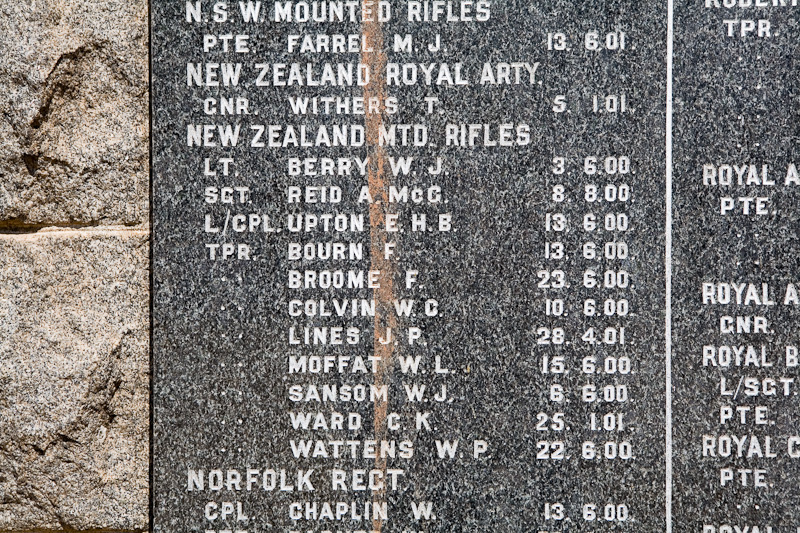
Frank Bourn d 1900
|
|
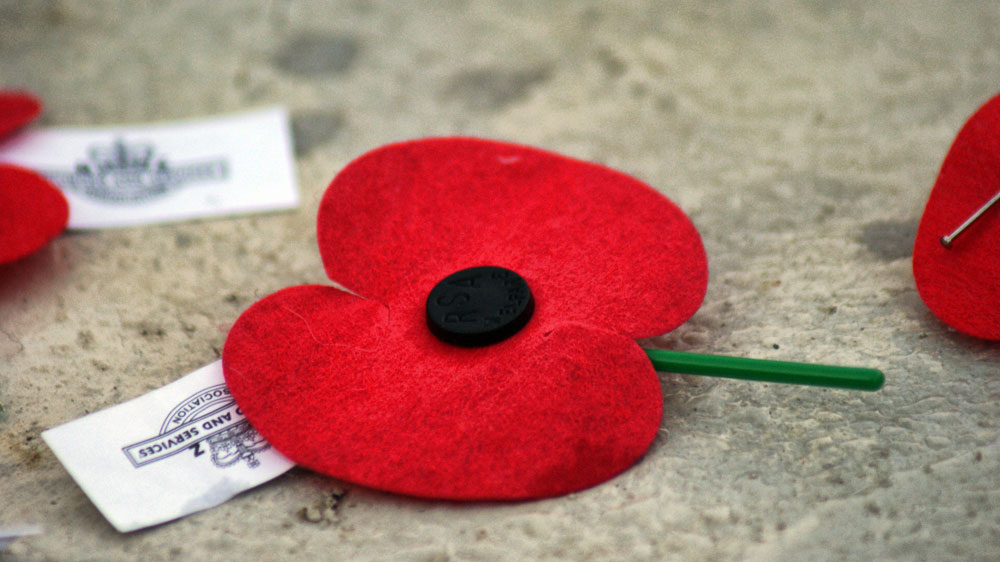
Relatives who lost their lives in the wars of the 20th Century: "We will remember them"
relation lifespan from died in
Boer War
Frank Piercey Bourn Jane’s cousin x3r 1870-1900 Christchurch, NZ Pretoria, South Africa
Great War
Willis Bray Julian’s cousin x2r 1889-1918 Honley, Yorkshire Arras, France
Reginald Charles Diver* Julian’s great-uncle 1896-1922 London London(*died after war, as a result of gassing)
William Lewis Jane’s great uncle 1887-1915 Scotland Off coast of Scotland
Alexander McDonald Smart Jane’s cousin x3r 1883-1915 Christchurch, NZ Gallipoli, Turkey
WW II
Alec Beanlands Sue’s uncle 1921-1944 Yorkshire Burma
Cecil Thomas T Brady Julian’s cousin x2r 1920-1942 Norfolk Friesland, Netherlands
Joseph Shirley Buxton Jane’s uncle’s uncle 1899-1941 Christchurch, NZ Libya
Robert E Thorpe Julian’s 2nd cous x1r 1923-1944 Rhode Island, USA New Guinea
NB we also seem to have lost several relatives to the 1918 flu epidemic in NZ.
Boer War
Frank Piercey Bourn Jane’s cousin x3r 1870-1900 Christchurch, NZ Pretoria, South Africa
Great War
Willis Bray Julian’s cousin x2r 1889-1918 Honley, Yorkshire Arras, France
Reginald Charles Diver* Julian’s great-uncle 1896-1922 London London(*died after war, as a result of gassing)
William Lewis Jane’s great uncle 1887-1915 Scotland Off coast of Scotland
Alexander McDonald Smart Jane’s cousin x3r 1883-1915 Christchurch, NZ Gallipoli, Turkey
WW II
Alec Beanlands Sue’s uncle 1921-1944 Yorkshire Burma
Cecil Thomas T Brady Julian’s cousin x2r 1920-1942 Norfolk Friesland, Netherlands
Joseph Shirley Buxton Jane’s uncle’s uncle 1899-1941 Christchurch, NZ Libya
Robert E Thorpe Julian’s 2nd cous x1r 1923-1944 Rhode Island, USA New Guinea
NB we also seem to have lost several relatives to the 1918 flu epidemic in NZ.
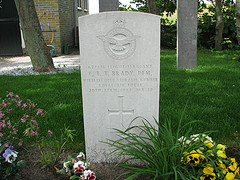
Cecil Brady 1942
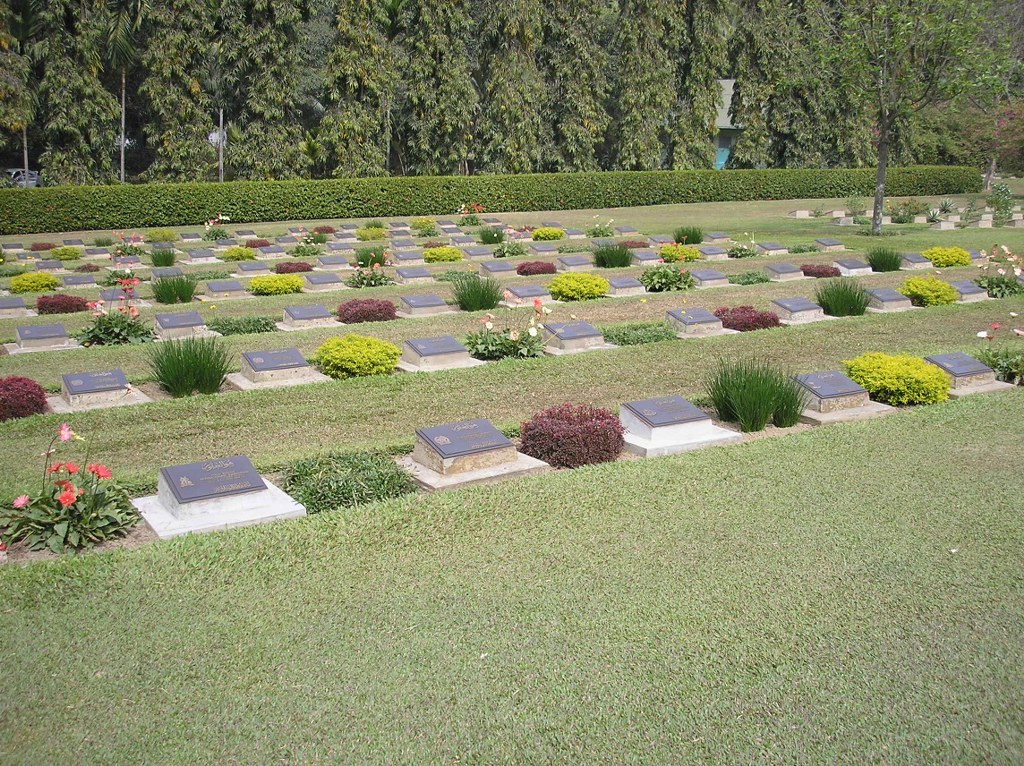
Alec Beanlands, Chittagong Cemetery, 1944
|

Joseph Buxton d 1944
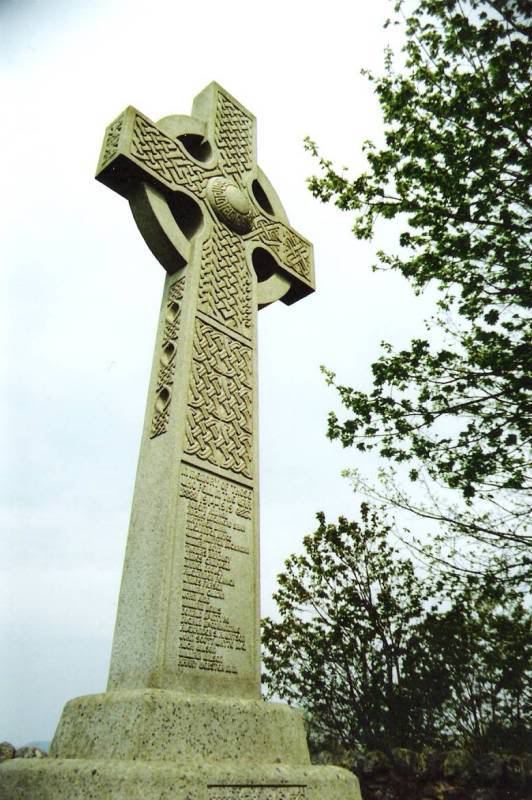
William Lewis 1915
|
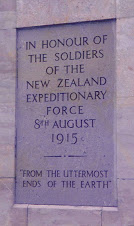
in memoriam Alexander Smart 1915

Willis Bray 1918
|
